


en
en v
Phone
Cart0 Tickets
Total: 0
Account
Calendar
Search
Menu
X

Platée

VenuePrague State Opera
CalendarSun 07 Mar 2027
Synopsis/Details


Platée – Jean-Philippe Rameau | Opera


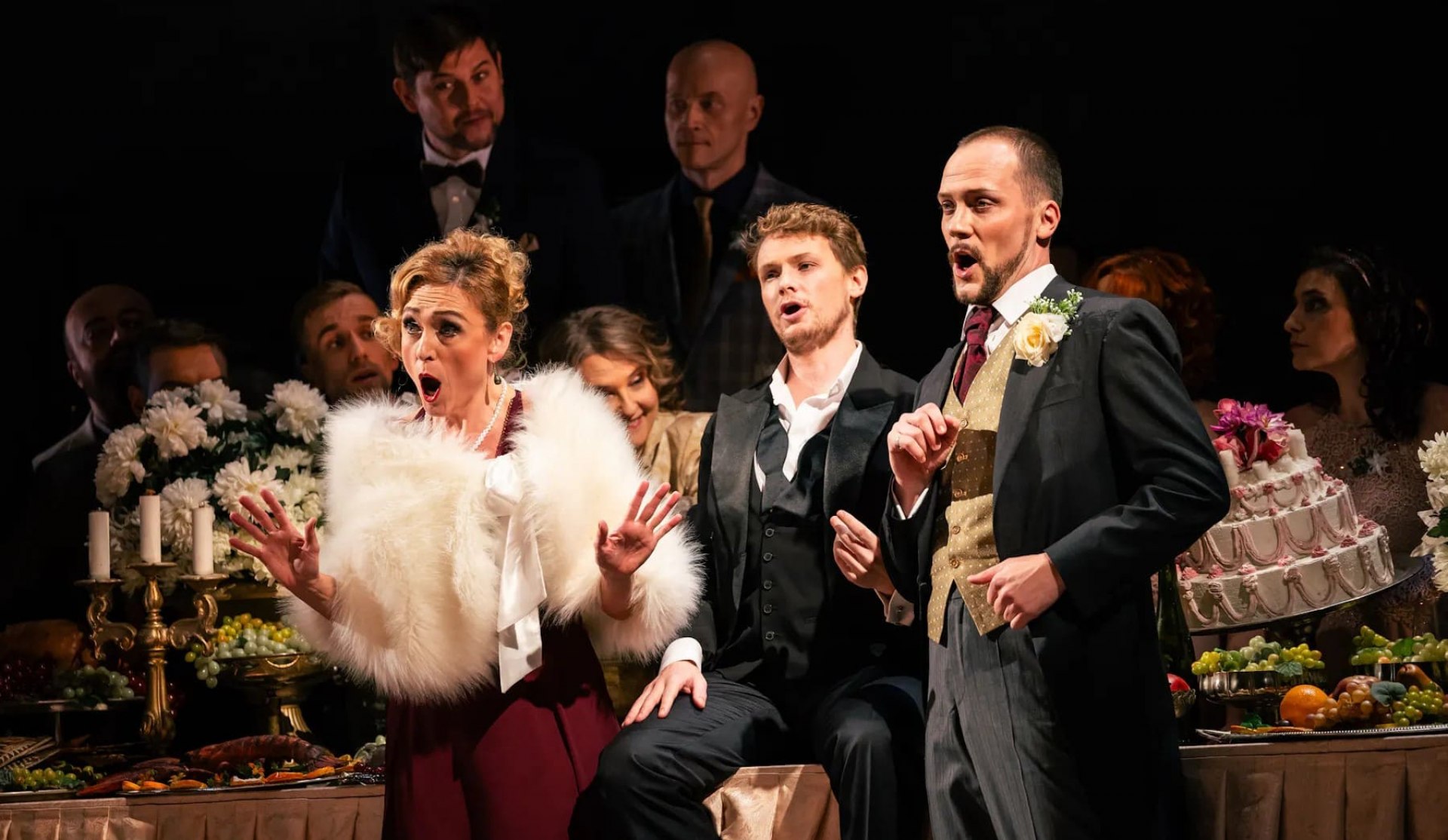
In 1745, Louis XV selected the comedy about an ugly nymph, enticed to believe that Jupiter, the king of the gods, has fallen in love with her, as one of the three operas for the celebrations of his son’s wedding to the Infanta María Teresa of Spain. Given that the bride is said to have been no beauty, we can speculate as to whether the choice of Rameau’s opera was the monarch’s spiteful prank – if that indeed was the case, it was fitting (and improper) for other reasons too. Platée not only pokes fun at a foolish, graceless sprite, it also ridicules the “holy” social institute of matrimony: the pathologically jealous wives and the timid yet resourceful husbands, who, albeit being Olympian gods, face diverse partnership troubles …


Argument


Prologue

Au royaume de Bacchus, Thespis, inventeur de la comédie, est réveillé par les Satyres, Ménades et autres vendangeurs. Il se résigne à fournir un nouveau divertissement, mais sans ménager personne. Thalie, Momus et l'Amour prêtent leur concours au sujet : les amours comiques de Jupiter.


Acte I

Au pied du mont Cithéron, au milieu des éléments déchaînés, le roi Cithéron se lamente de la colère des dieux, et particulièrement de Junon (« Dieux, qui tenez l'univers dans vos mains »). Mercure descend des cieux dans l'espoir de guérir Junon de sa jalousie. Cithéron suggère que Jupiter feigne l'amour pour la nymphe ridicule qui règne sur le marais et Mercure, enchanté de l'idée, remonte au ciel. La grotesque Platée paraît, cherchant qui pourrait la consoler de sa solitude (« Que ce séjour est agréable »), accompagnée par le coassement des grenouilles et le chant des coucous. Hélas, elle aime Cithéron, qui n'éprouve pour elle que du… respect. La nymphe s'indigne (« Dis donc, dis donc pourquoi ? »), soutenue par le chœur qui coasse (« Quoi ? Quoi ? »). L'arrivée de Mercure met fin au tumulte et annonce que Jupiter, le maître du tonnerre, est tombé sous le charme de la déesse qui règne dans ces marais superbes. D'ailleurs, le temps se couvre, preuve de la jalousie de Junon : l'acte s'achève sur un enchaînement de danses et d'airs, arrêté par un orage orchestral des plus frénétiques.


Acte II

Mercure a prévenu Junon, qui prépare sa vengeance. Jupiter daigne enfin descendre des cieux (« Aquilons trop audacieux ») et, à la vue du nuage divin, Platée est troublée (« À l'aspect de ce nuage »). Voilà que le dieu se métamorphose dans la meilleure tradition mythologique. Il devient d'abord un quadrupède, qui inspire à l'orchestre des braiments divers, puis « le plus beaux des hiboux », avant de s'envoler. Jupiter revient sous sa véritable forme : « Seriez-vous insensible à mes tendres vœux ? ». Ce à quoi la nymphe répond : « Ouffe » ! Le dieu convoque Momus et ordonne un divertissement. Le chœur se moque de la nouvelle élue (« Qu'elle est comique ! Qu'elle est belle ! »). Mais voici la Folie qui vient de dérober la lyre d'Apollon. Elle conte l'histoire de Daphné et d'Apollon dans un délirant air à l'italienne (« Aux langueurs d'Apollon, Daphné se refusa » ), puis de très beaux menuets en goûts en vièle, c’est-à-dire en imitant cet instrument champêtre, se font entendre, ce sont les moments les plus célèbres de la partition. Tous chantent ensuite la nouvelle Junon (« Hé, bon, bon, bon »).


Acte III

Junon est en rage (« Haine, dépit, jalouse rage »), en dépit des efforts de Mercure pour la calmer. Platée réclame Hymen et l'Amour, mais Momus, pour retarder la cérémonie, multiplie les divertissements. De fausses Grâces puis de joyeux paysans viennent danser (« Chantez Platée, égayez-vous ») à la grande impatience de la nymphe. Jupiter est enfin contraint de jurer sa foi : que fait donc Junon ? Elle surgit enfin, prête à faire un mauvais sort à sa rivale, mais éclate de rire en arrachant le voile de Platée : « Que vois-je ! Ô ciel ! » et Jupiter de répondre : « vous voyez votre erreur ». Les deux époux réconciliés sur le dos de l'infortunée remontent aux cieux sans un mot pour elle. Platée, furieuse mais impuissante, doit fuir sous les quolibets du chœur.


Cast

Approximate Running Time: 2 hours, including a 20-minute intermission
Language: Performed in French, with surtitles in Czech and English
Suitable for audiences aged 12 and above


Conductor: Václav Luks

Thespis: Ruairi Bowen

Satyr: Tomáš Šelc

Thalie: Shira Patchornik

Momus: Lukáš Zeman

Amor: Pavla Radostová

Platée: Marcel Beekman

Cithéron: Tomáš Šelc

Jupiter: Pavol Kubáň

Juno: Michaela Zajmi

Mercury: Ruairi Bowen

Momus: Lukáš Zeman

Madness: Shira Patchornik

Clarine: Pavla Radostová


Libretto: Jacques Autreau, Adrien-Joseph le Valois d'Orville, Sylvain Ballot de Sauvot

Stage director: SKUTR (Martin Kukučka a Lukáš Trpišovský)

Choreography: Jan Kodet

Sets, video design: Jakub Kopecký

Costumes: Simona Rybáková

Light design: SKUTR (Martin Kukučka a Lukáš Trpišovský), Jakub Kopecký, Jan Dörner

Dramaturgy: Ondřej Hučín


Collegium Vocale 1704
Collegium 1704
National Theatre Opera Ballet
State Opera Orchestra

Venue
Prague State Opera

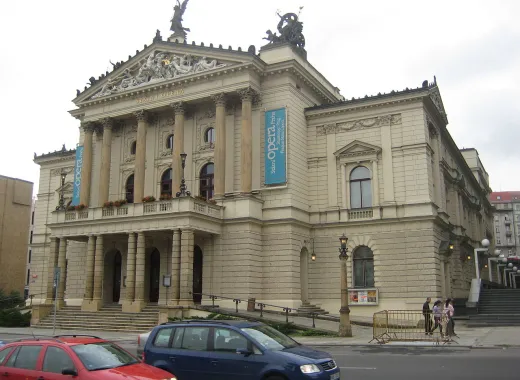
The State Opera today

The State Opera (formerly the State Opera Prague, between 1948 and 1992 the Smetana Theatre, and originally the New German Theatre) has been a part of the National Theatre since 2012. The Opera and Ballet ensembles give repertory performances at the State Opera.


Practical information


Where to buy tickets

When purchasing tickets online, you will receive an e-ticket, which does not need to be printed—you can simply present it on your device upon entry. When available, you may also choose to collect printed tickets from the National Theatre box offices, and any tickets purchased directly at the box office will be issued in physical form.

The National Theatre sells tickets up to 6 months in advance.
Sales always start on the 1st day of the month at 9am, except in January when pre-sales do not start until the 2nd day due to a public holiday.


When do the doors open prior the show?

The National Theatre, The State Opera and the Estates Theatre are open 45 minutes prior the performance in time of increased hygiene practices. The evening box offices are open at the same time.

The main box office at the New Stage on play days is open until the beginning of the show. The New Stage auditorium is open 30 minutes prior the performance.


What kind of dress is suitable for attending the theatre?

Dress codes are only required for special events. By their appearance, the visitors indicate that they are aware of the festive occasion they are experiencing at the theatre. Persons in markedly soiled clothes and persons whose behaviour may compromise the safety of the other visitors are not allowed to enter the respective premises, or can be ejected from them.


Where do I park? How much does the parking cost?

While visiting the State Opera, you can take the slip road on Wilsonova street from the left lane close to the State Opera building to the Parking Centrum above-ground garage. The parking fee is 60 CZK/h.

Only non-cash payments: Parking fees can be paid exclusively by cashless payment card or another virtual device (watch or phone). Thank you for your understanding.”


Buffets at the State Opera

No waiting. For your benefit, please pre-order your food and beverages at the bar to minimize waiting in the queue!


Accessibility for the disabled

All the National Theatre venues are accessible to disabled persons, with special seats allocated for them in the auditorium. It is, however, advisable to consult each visit in advance with the National Theatre Sales Department.


Can I get an artist’s signature? Can I leave them flowers?

The National Theatre does not provide signatures of artists or contacts to them. You can leave flowers for artists performing in the show before its beginning at the theatre stuff.


History

The Prague State Opera resides in the building which on January 5, 1888 was opened as a Prague German stage with the performance of Wagner’s opera, The Mastersingers of Nürnberg. In the 19th century, Prague Germans performed in the Estate’s Theater in alternation with a Czech company. Desire for their own theater led to negotiations in 1883 for the construction of a new theater building for the German Theater Association. Over the next three years, a blueprint was drawn up and handed over to the Vienna atelier of Fellner and Hellmer. Also sharing in the design was the architect of the Vienna Municipal Theater, Karl Hasenauer, while Prague architect Alfons Wertmüller took part in the construction. Financing came from private collections. With its spacious auditorium and neo-Rococo decoration, this theater building is among the most beautiful in Europe.


Access:

By tram


By daytime tram No. 11 to the stop “Muzeum”, through the underpass beneath Legerova street in the direction of the NationalMuseum, at the crossroads turn right along the NewBuilding of the NationalMuseum.


By daytime trams Nos. 3, 9, 14 and 24 or night trams Nos. 51, 52, 54, 55, 56 and 58 to the stop “Václavské náměstí”, then by foot uphill on the left side of the Wenceslas Square to the traffic lights across Wilsonova and Vinohradská streets. Then turn left along the NewBuilding of the NationalMuseum.


By metro

To the “Muzeum” station, lines A and C (green and red), and then by foot along the NewBuilding of the NationalMuseum.


Accomodation

Buy now

Gift vouchers

Gift someone an unforgettable night at the opera.
Choose a gift coupon and let them pick the performance they love—music, drama, and world-class artistry, all in one elegant experience.
Prague Opera Tickets
Facebook
Payment
Ticket search
Google Play
App Store
© 2026 RM EUROPA TICKET GmbH
Whatsapp