
 EN
EN DE
DE IT
IT FR
FR ES
ES RU
RU JP
JP RO
RO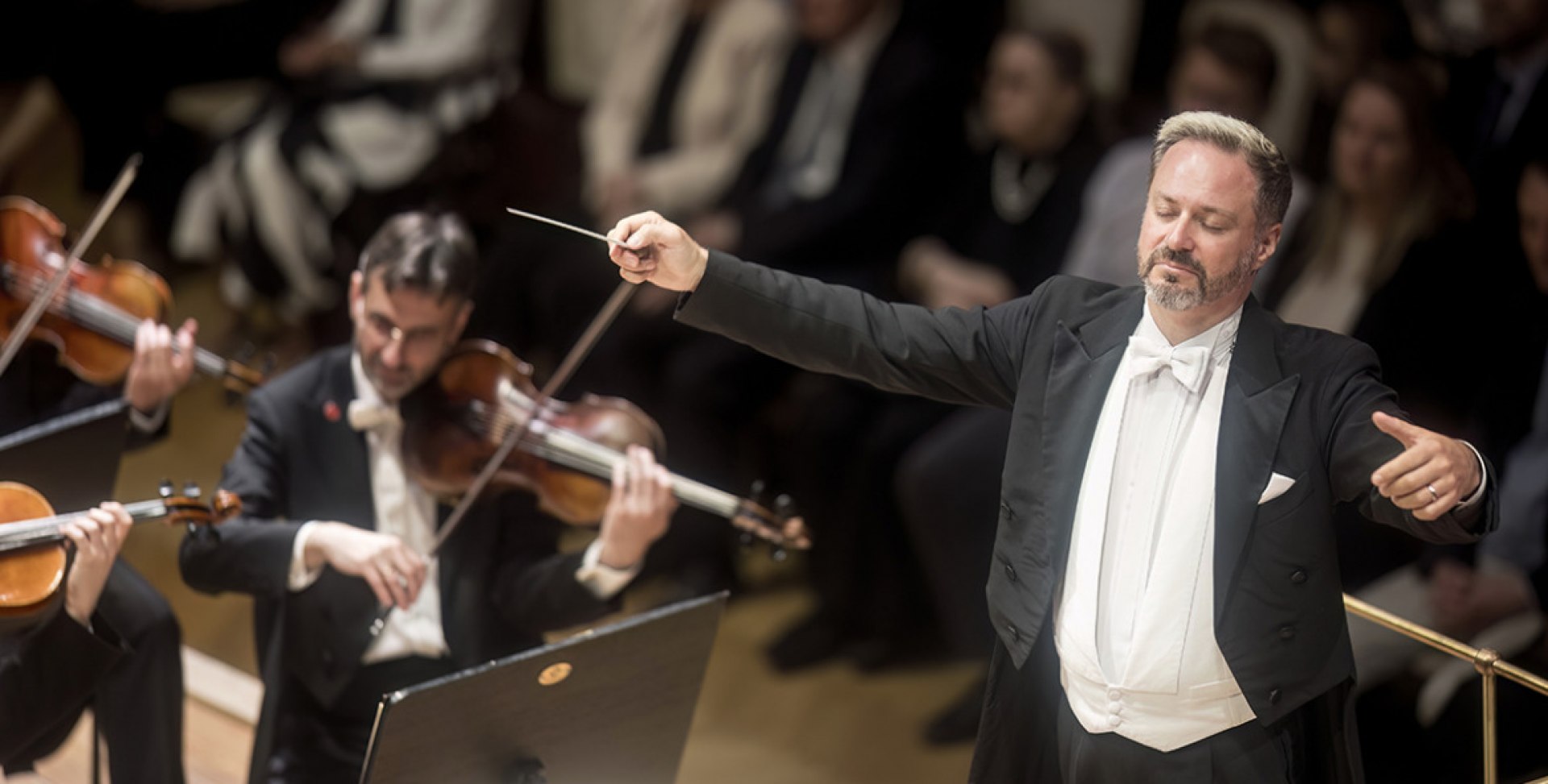
© Vojtěch Brtnický
Marie-Magdeleine
Order tickets
 October 2035 October 2035 | ||||||
|---|---|---|---|---|---|---|
Mo | Tu | We | Th | Fr | Sa | Su |
An oratorio by Jules Massenet on the last days of Jesus Christ from the perspective of Mary Magdalene. Featuring stars of Covent Garden, the Vienna State Opera, and the Met.
Jules Massenet (1842–1912), one of the greatest operatic composers, author of Manon, Werther and Thaïs, wrote his oratorio Marie-Magdeleine before he had reached the age of thirty. It was his first major triumph as a composer, meriting the admiration of Peter Ilyich Tchaikovsky, Charles Gounod and George Bizet. The latter, awestruck after the premiere at the Théâtre de l’Odéon in Paris, wrote to him, saying: “Never has our modern school produced anything of that kind: you’ll give me a fever, you brigand!” This “drame sacré”, as Massenet described his work, written to a libretto by Louis Gallet, traces the last days of Jesus’s life from the perspective of Mary Magdalene.
The fact that Aleksandra Kurzak is a major figure on the current opera scene becomes clear with a mere glance at her plans for this season: Tosca at the Berlin State Opera, Semperoper in Dresden and in a new production at London’s Royal Opera House, where she alternates with Anna Netrebko, Mimi at the Metropolitan Opera and Adriana Lecouvreur at Naples’ Teatro di San Carlo. The artist, whose recordings are released exclusively with Decca and Sony Classical, has also given her debuts at Milan’s Teatro alla Scala and the Vienna State Opera. When she sang the role of Cio-Cio-San in Madama Butterfly at the Met in 2024, the Bachtrack website wrote: “She triumphed […] Her large and luminous lyric soprano displayed a remarkable range of colours and nuances.”
A native of Reykjavik Arnheiður Eiríksdóttir has been a key player in the National Theatre Opera and State Opera companies since 2020. She has created numerous roles here, including Charlotte in Massenet’s Werther. “Her voice was filled with exquisite colours, dynamic arcs and lingering cantilenas, her crescendos were exemplary yet, at the same time, she safely carried off the finesses of French opera,” wrote Jan Sebastian Tomsa on KlasikaPlus. In 2024 she garnered the coveted International Opera Award in the “Rising Star” category and she also won a Thalia Award for her performance as Octavian in the State Opera’s production of Der Rosenkavalier. She has worked both with domestic and foreign orchestras, and with prominent opera venues, such as the Bavarian State Opera and the Bergen National Opera.
Program and cast
Programme
Jules Massenet: Marie-Magdeleine, sacred drama in three acts
Performers
National Theatre Chorus and Orchestra
Robert Jindra – conductor
Lukáš Kozubík – chorusmaster
Prague Philharmonic Children’s Choir
Petr Louženský – chorusmaster
Aleksandra Kurzak – soprano (Méryem, la Magdaléenne)
Arnheiður Eiríksdóttir – mezzo-soprano (Marthe)
Kang Wang – tenor (Jésus)
František Zahradníček – bass (Judas)
Prague National Theatre
The National Theatre today
The historical building of the National Theatre, constructed in 1883, is generally considered the prime stage in the CzechRepublic. It is the flagship of the National Theatre institution, today amounting to five buildings and encompassing four companies. You can see there Opera, Drama and Ballet performances.
Practical information
Where to buy tickets
When purchasing tickets online, you will receive an e-ticket, which does not need to be printed—you can simply present it on your device upon entry. When available, you may also choose to collect printed tickets from the National Theatre box offices, and any tickets purchased directly at the box office will be issued in physical form.
The National Theatre sells tickets up to 6 months in advance.
Sales always start on the 1st day of the month at 9am, except in January when pre-sales do not start until the 2nd day due to a public holiday.
When do the doors open prior the show?
The National Theatre, The State Opera and the Estates Theatre are open 45 minutes prior the performance in time of increased hygiene practices. The evening box offices are open at the same time.
The main box office at the New Stage on play days is open until the beginning of the show. The New Stage auditorium is open 30 minutes prior the performance.
What kind of dress is suitable for attending the theatre?
Dress codes are only required for special events. By their appearance, the visitors indicate that they are aware of the festive occasion they are experiencing at the theatre. Persons in markedly soiled clothes and persons whose behaviour may compromise the safety of the other visitors are not allowed to enter the respective premises, or can be ejected from them.
Where do I park?
While visiting the National Theatre and the New Stage, you are welcome to use the underground National Theatre car park (access from Ostrovní Street). Please note that the parking is subject to a fee.
Only non-cash payments: Parking fees can be paid exclusively by cashless payment card or another virtual device (watch or phone). Thank you for your understanding
Buffets at the State Opera
No waiting. For your benefit, please pre-order your food and beverages at the bar to minimize waiting in the queue!
Accessibility for the disabled
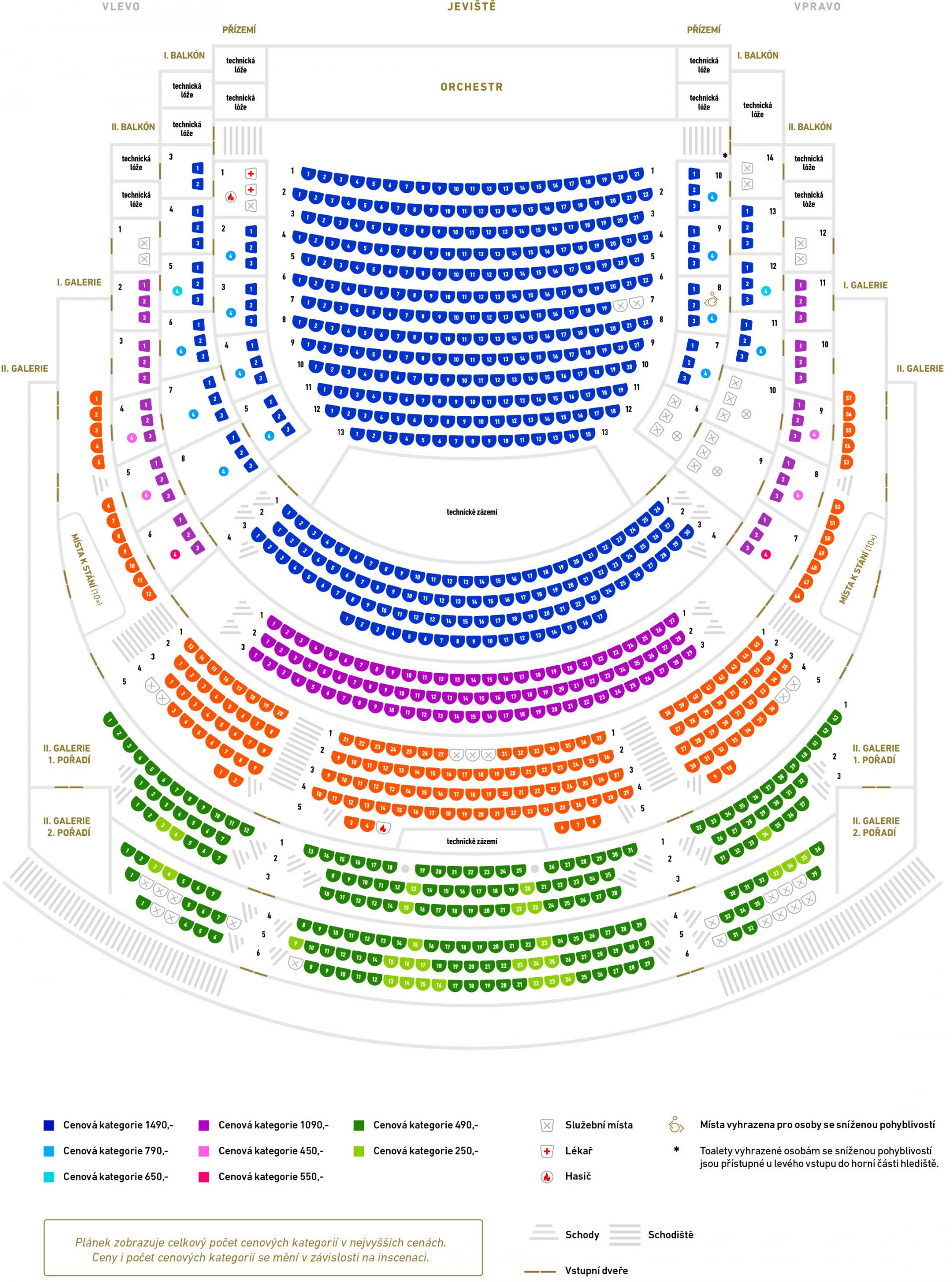
All the National Theatre venues are accessible to disabled persons, with special seats allocated for them in the auditorium. It is, however, advisable to consult each visit in advance with the National Theatre Sales Department.
Can I get an artist’s signature? Can I leave them flowers?
The National Theatre does not provide signatures of artists or contacts to them. You can leave flowers for artists performing in the show before its beginning at the theatre stuff.
Idea of building a stately theatre for the Czech nation
The National Theatre is the embodiment of the will of the Czech nation for a national identity and independence. Collections of money among the broad mass of the people facilitated its construction and hence the ceremonial laying of its foundation stone on 16 May 1868 was tantamount a nationwide political manifestation.
The idea of building a stately edifice to serve as a theatre was first mooted in the autumn of 1844 at meetings of patriots in Prague. It began to materialise through a request for “the privilege of constructing, furnishing, maintaining and managing” an independent Czech theatre, which was submitted to the Provincial Committee of the Czech Assembly by František Palacký on 29 January 1845. The privilege was granted in April 1845. Yet it was not until six years later – in April 1851 – that the Society for the Establishment of a Czech National Theatre in Prague (founded in the meantime) made its first public appeal to start collections. A year later the proceeds of the first collections allowed for the purchase of land belonging to a former salt works with the area of less than 28 acres, which predetermined the magnificent location of the theatre on the bank of the river Vltava facing the panorama of Prague Castle, yet at the same time the cramped area and trapezoidal shape posed challenging problems for the building’s designers.
By tram
By daytime trams Nos. 6, 9, 18 and 22 and night trams Nos. 53, 57, 58, 59 to the stop “Národní divadlo” – in front of the NT historical building; by daytime tram No. 17 to the stop “Národní divadlo”.
By metro
To the station “Můstek”, line B (yellow), and then by foot on Národní street; or to the station “Karlovo náměstí” and then two stops by tram No. 6, 18 or 22 to the stop “Národní divadlo”. To the station “Staroměstská”, line A (green), and then two stops by tram No. 17 to the stop “Národní divadlo”.
Related events