
 EN
EN DE
DE IT
IT FR
FR ES
ES RU
RU JP
JP RO
RO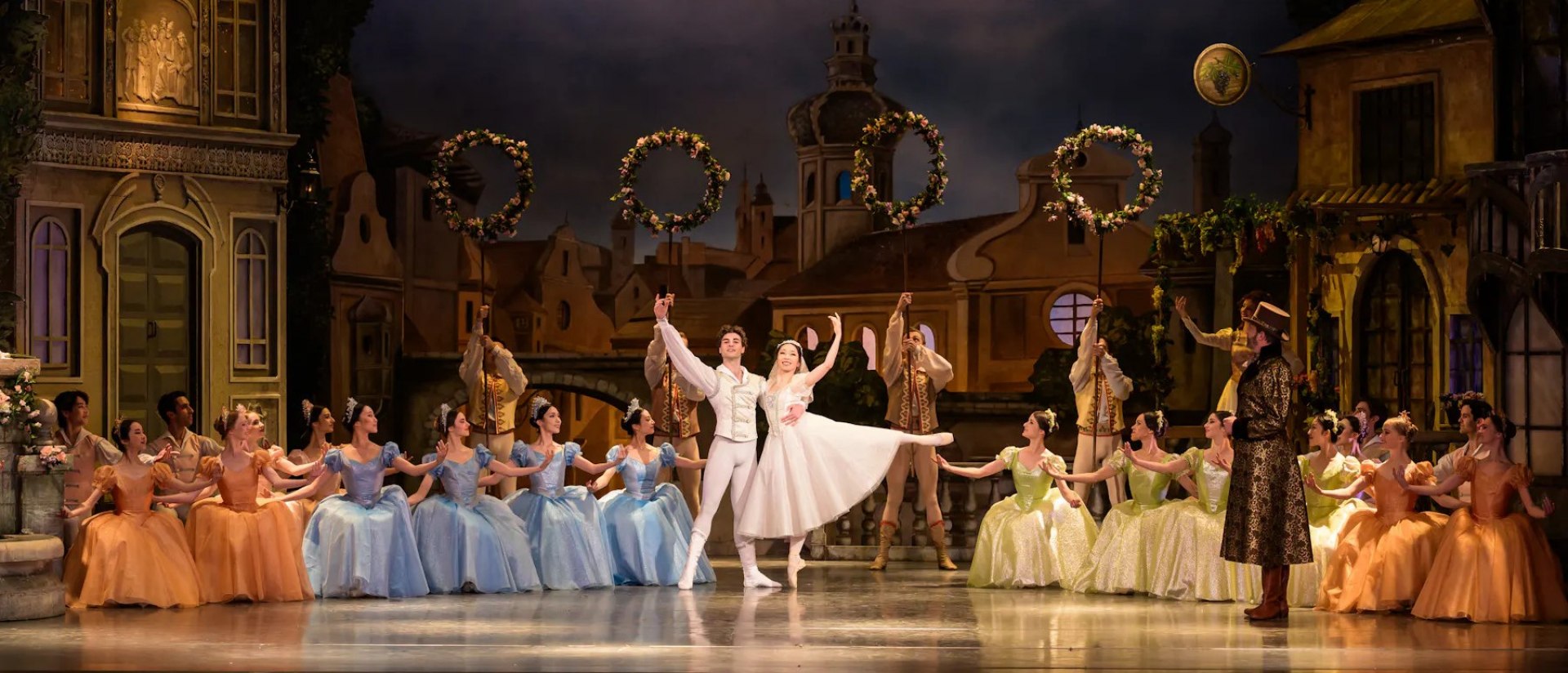
© Serghei Gherciu
Coppélia
Order tickets
 August 2148 August 2148 | ||||||
|---|---|---|---|---|---|---|
Mo | Tu | We | Th | Fr | Sa | Su |
Approximate running time: 2 hours 20 minutes, 2 intermission (20 minutes)
A ballet in three acts
During the 154 years since its world premiere, Coppélia has been performed all over the world. The current Czech National Ballet production, first presented on 16 May 2024 at the State Opera in Prague, is a revival of Ronald Hynd’s version, premiered 1985 in London by English National Ballet.
Coppélia tells a story of love, yet, unlike other Romantic ballets, in which unrequited passion leads to death, it ends happily (with marriage, thus complying with the 19th-century conventions).
An extraordinary character is Coppélia, a life-size doll created by Doctor Coppélius, an inventor of mechanical toys and other machines. Sitting motionlessly on a balcony of his house, the beautiful “girl” attracts the attention of the village youths. One of them, Franz, is so infatuated with her that he neglects his fiancée Swanilda, who becomes upset and jealous. No one has the slightest inkling that Coppélia is actually a doll whose inventor can only bring to life by having a human spirit breathe into her. Fortunately, Doctor Coppélius’s plan to steal Franz’s soul for this purpose is thwarted by Swanilda. Franz realises his folly and returns to his fiancée. The ballet culminates with Swanilda and Franz’s wedding within a harvest festival in the fashion of Galician traditions.
For the time, the original Coppélia, choreographed by Arthur Saint-Léon to Léo Delibes’s music, was a trailblazing work, incorporating as it did a number of novel aspects. Unlike other ballets dating from the period, it was set in a real milieu (Galicia, a crown land of the Austrian Empire), responded to scientific progress and did not depict supernatural beings. What is more, it embraced the national artistic tradition and the ground-breaking ideas of the Revolution of 1848. Drawing inspiration from the exploratory trip he and his friend Jules Massenet made to Austria-Hungary, Léo Delibes included in the score the Polish Mazurka and the Hungarian Czardas, as well as the Czech Polka. All of this is brought to bear in Ronald Hynd’s adaptation. His Coppélia respects tradition, movement content and the creators who have left their respective hallmarks: Arthur Saint-Léon, Marius Petipa and Enrico Cecchetti.
“There is no prince or princess, there are no swans or sleeping beauties. Only two villagers, a boy and a girl falling in love with each other. It’s about life … I think that is precisely why the ballet is so popular. Audiences can identify with the simple fetching story.”
Ronald Hynd
Czech National Ballet
Pupils of Ballet Preparatory School
State Opera Orchestra
Program and cast
Prague State Opera
The State Opera today
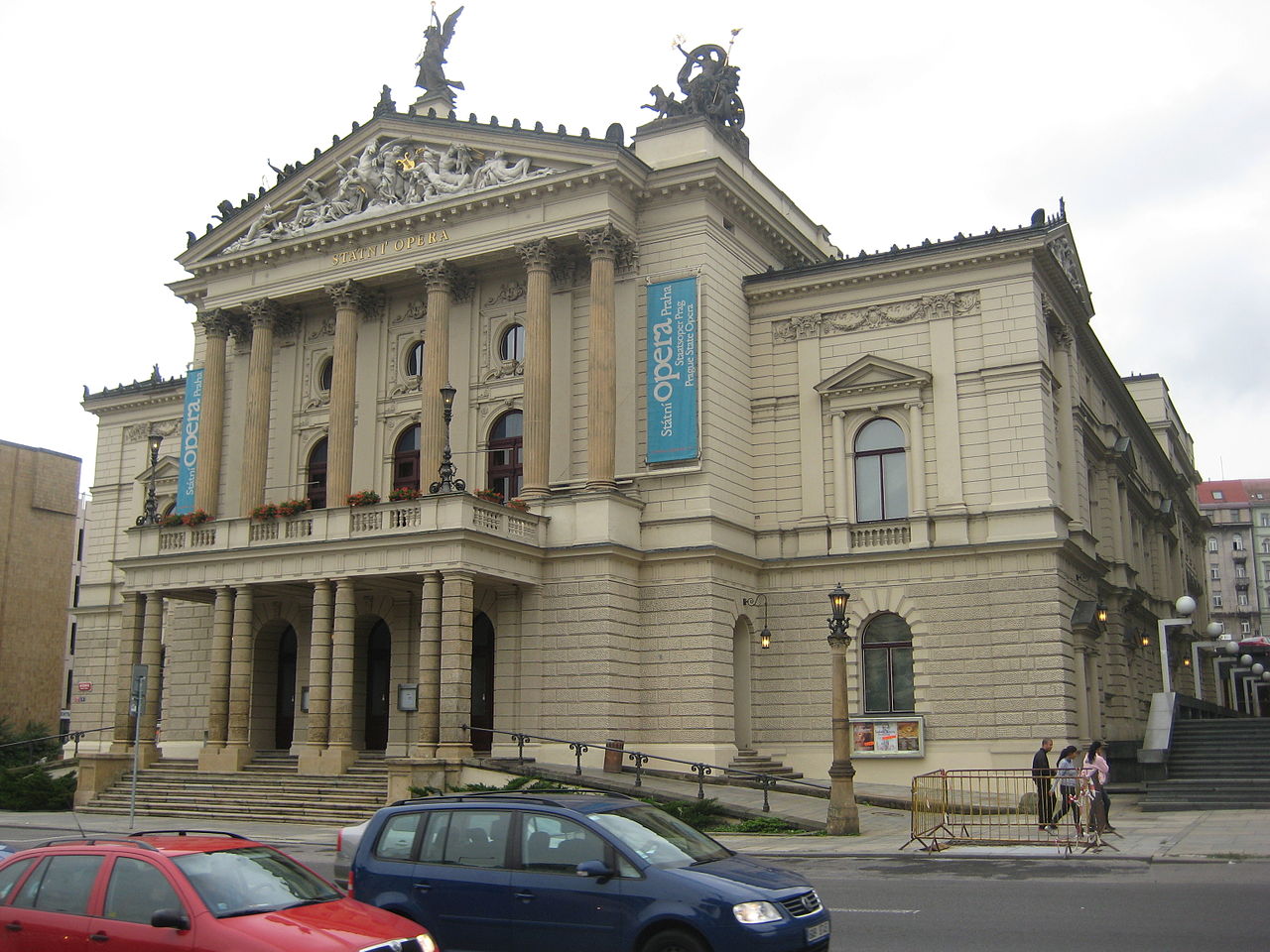
The State Opera (formerly the State Opera Prague, between 1948 and 1992 the Smetana Theatre, and originally the New German Theatre) has been a part of the National Theatre since 2012. The Opera and Ballet ensembles give repertory performances at the State Opera.
Practical information
Where to buy tickets
When purchasing tickets online, you will receive an e-ticket, which does not need to be printed—you can simply present it on your device upon entry. When available, you may also choose to collect printed tickets from the National Theatre box offices, and any tickets purchased directly at the box office will be issued in physical form.
The National Theatre sells tickets up to 6 months in advance.
Sales always start on the 1st day of the month at 9am, except in January when pre-sales do not start until the 2nd day due to a public holiday.
When do the doors open prior the show?
The National Theatre, The State Opera and the Estates Theatre are open 45 minutes prior the performance in time of increased hygiene practices. The evening box offices are open at the same time.
The main box office at the New Stage on play days is open until the beginning of the show. The New Stage auditorium is open 30 minutes prior the performance.
What kind of dress is suitable for attending the theatre?
Dress codes are only required for special events. By their appearance, the visitors indicate that they are aware of the festive occasion they are experiencing at the theatre. Persons in markedly soiled clothes and persons whose behaviour may compromise the safety of the other visitors are not allowed to enter the respective premises, or can be ejected from them.
Where do I park? How much does the parking cost?
While visiting the State Opera, you can take the slip road on Wilsonova street from the left lane close to the State Opera building to the Parking Centrum above-ground garage. The parking fee is 60 CZK/h.
Only non-cash payments: Parking fees can be paid exclusively by cashless payment card or another virtual device (watch or phone). Thank you for your understanding.”
Buffets at the State Opera
No waiting. For your benefit, please pre-order your food and beverages at the bar to minimize waiting in the queue!
Accessibility for the disabled
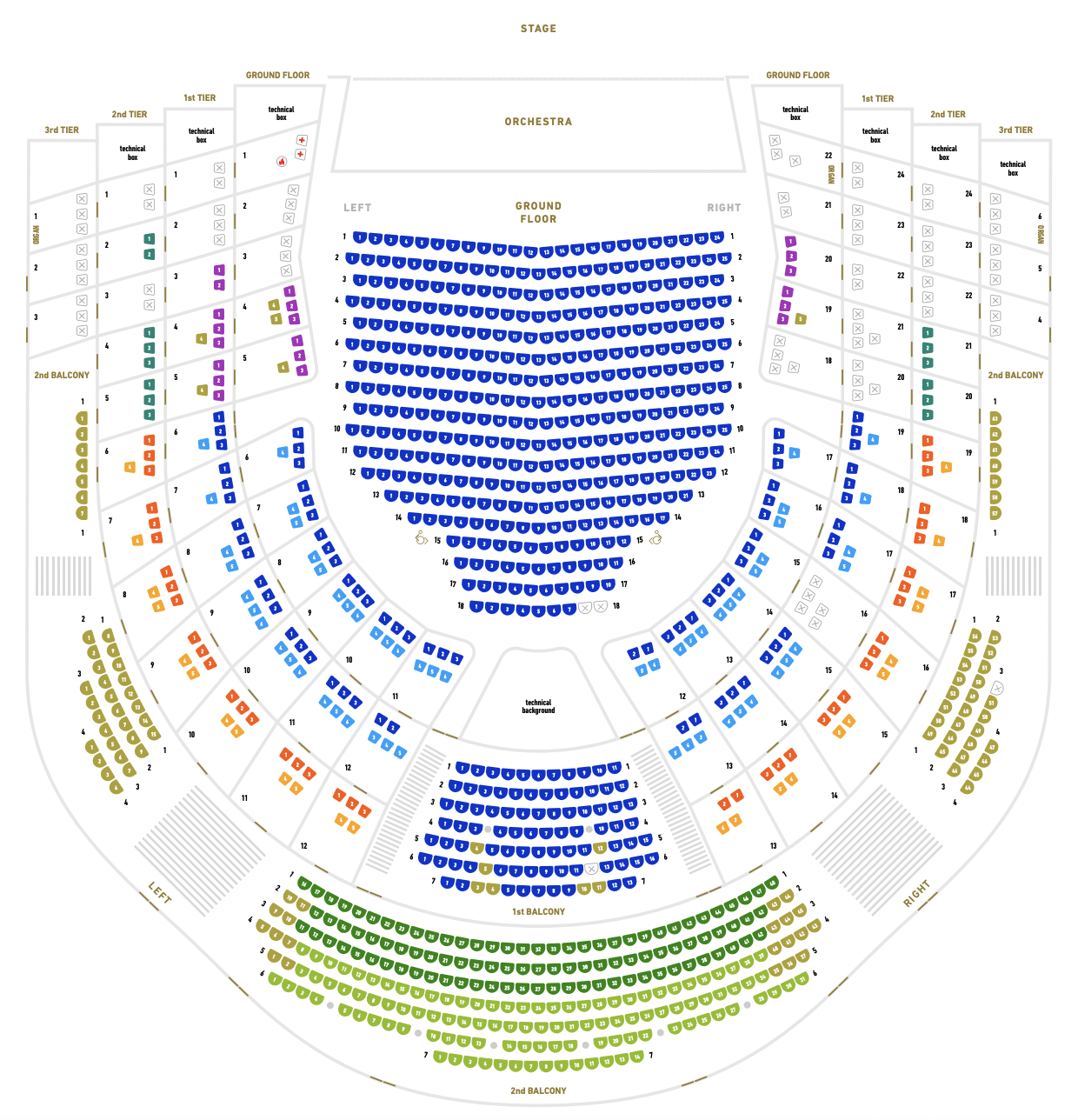
All the National Theatre venues are accessible to disabled persons, with special seats allocated for them in the auditorium. It is, however, advisable to consult each visit in advance with the National Theatre Sales Department.
Can I get an artist’s signature? Can I leave them flowers?
The National Theatre does not provide signatures of artists or contacts to them. You can leave flowers for artists performing in the show before its beginning at the theatre stuff.
History
The Prague State Opera resides in the building which on January 5, 1888 was opened as a Prague German stage with the performance of Wagner’s opera, The Mastersingers of Nürnberg. In the 19th century, Prague Germans performed in the Estate’s Theater in alternation with a Czech company. Desire for their own theater led to negotiations in 1883 for the construction of a new theater building for the German Theater Association. Over the next three years, a blueprint was drawn up and handed over to the Vienna atelier of Fellner and Hellmer. Also sharing in the design was the architect of the Vienna Municipal Theater, Karl Hasenauer, while Prague architect Alfons Wertmüller took part in the construction. Financing came from private collections. With its spacious auditorium and neo-Rococo decoration, this theater building is among the most beautiful in Europe.
Access:
By tram
By daytime tram No. 11 to the stop “Muzeum”, through the underpass beneath Legerova street in the direction of the NationalMuseum, at the crossroads turn right along the NewBuilding of the NationalMuseum.
By daytime trams Nos. 3, 9, 14 and 24 or night trams Nos. 51, 52, 54, 55, 56 and 58 to the stop “Václavské náměstí”, then by foot uphill on the left side of the Wenceslas Square to the traffic lights across Wilsonova and Vinohradská streets. Then turn left along the NewBuilding of the NationalMuseum.
By metro
To the “Muzeum” station, lines A and C (green and red), and then by foot along the NewBuilding of the NationalMuseum.
Related events