
 EN
EN DE
DE IT
IT FR
FR ES
ES RU
RU JP
JP RO
RO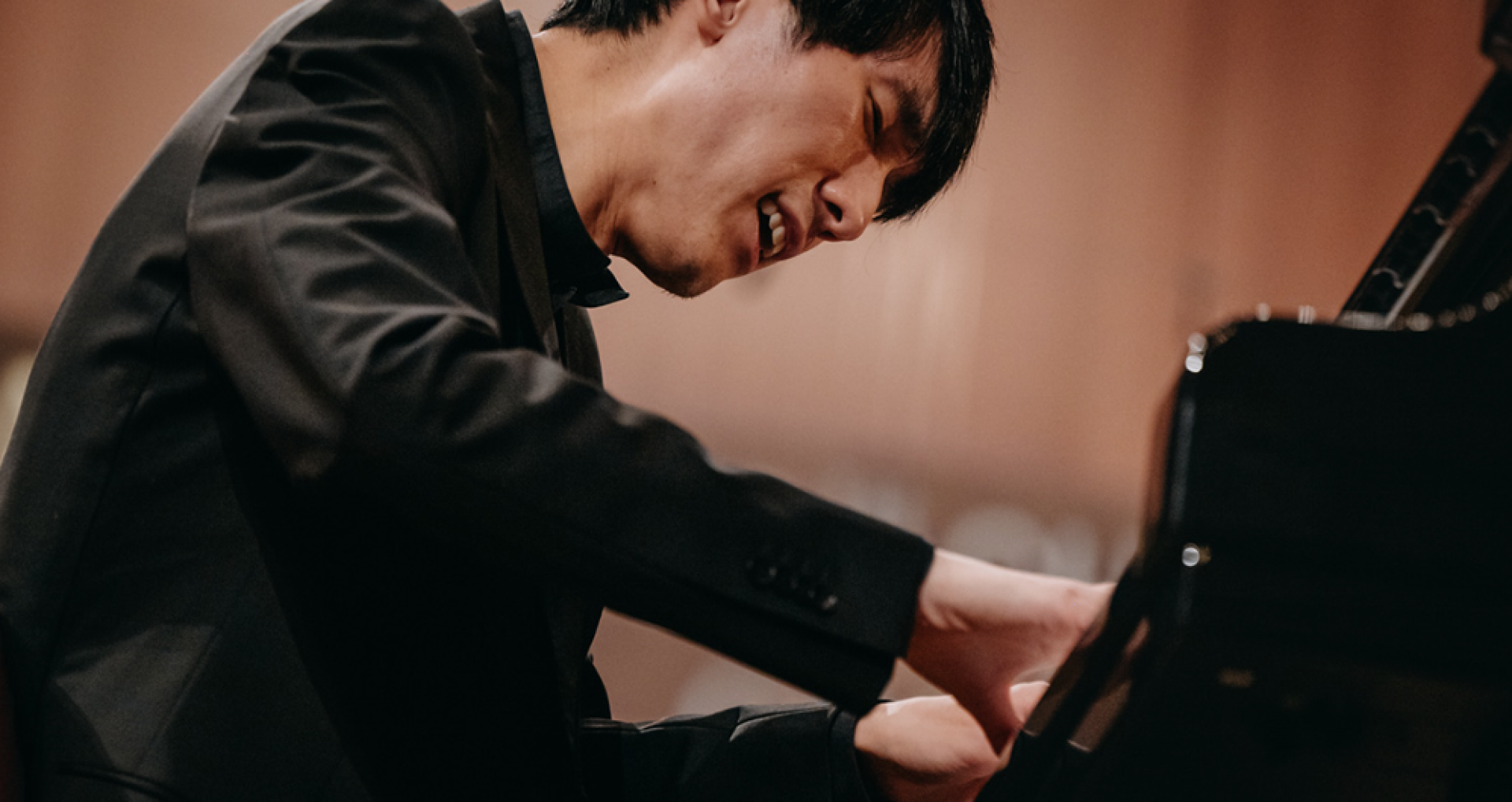
© Wojciech Grzedzinski
Chopin Competition Winner
Order tickets
 July 2028 July 2028 | ||||||
|---|---|---|---|---|---|---|
Mo | Tu | We | Th | Fr | Sa | Su |
The Prague Spring will present a recital given by the winner of the 2025 International Chopin Piano Competition in Warsaw, Eric Lu
The International Fryderyk Chopin Piano Competition in Warsaw is possibly the only competition in the world whose winners become classical music stars practically overnight. Triumph in the Polish capital launched the careers of Maurizio Pollini (1960), Martha Argerich (1965), Garrick Ohlsson (1970), Krystian Zimerman (1975), Yulianna Avdeeva (2010) and Seong-Jin Cho (2015). These artists have all performed at the Prague Spring, many of them in their Czech debut immediately after their victory. In 2026 they will be joined by the winner of the final round held on 20 October 2025, American pianist Eric Lu. We can look forward to his Prague Spring recital in the Rudolfinum on 22 May.
Eric Lu was already a huge hit at the Chopin competition ten years ago when, at a mere seventeen years of age, he astonished the entire audience with his performance in the final round. In 2018 he won the Leeds International Piano Competition, which gave rise not only to an exclusive contract with prominent label Warner Classics, but also to his collaboration with leading world orchestras and concert venues. He has appeared with the Boston, Chicago and London Symphonies, also with the Los Angeles Philharmonic, the Royal Philharmonic Orchestra in London and the Oslo Philharmonic, and he has given his debuts at the BBC Proms, the Leipzig Gewandhaus, Wigmore Hall, Elbe Philharmonie, Seoul Arts Center and the Louis Vuitton Foundation in Paris. “Going by the buzz in the hallways at intermission, I’m not the only one who would love to hear him play more of anything,” wrote The Boston Globe after his debut with the Boston Symphony Orchestra. Lu has worked with Riccardo Muti, Mirga Gražinytė-Tyla and Thomas Dausgaard, and he has also encountered Czech conductor Tomáš Netopil on the concert platform. In 2021 he received the prestigious Avery Fisher Career Grant, awarded to America’s most talented young artists, and from 2019 to 2022 he was part of the BBC’s New Generation Artists programme. He studied with Robert McDonald and Jonathan Biss at the Curtis Institute of Music in Philadelphia. His mentors include Mitsuko Uchida, Imogen Cooper and Dang Thai Son. He currently divides his time between Berlin and Boston.
Program and cast
Programme
Robert Schumann: Waldszenen Op. 82
Fryderyk Chopin : Polonaise in B-flat major Op. 71 No. 2
Fryderyk Chopin: Ballade No. 4 in F minor Op. 52
Franz Schubert: Impromptu in F minor Op. posth. 142 No. 1 D 935
Fryderyk Chopin: Piano Sonata No. 3 in B minor Op. 58
Performers
Eric Lu – piano
Rudolfinum
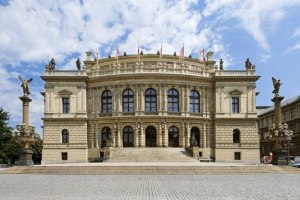
The Rudolfinum, one of the most noteworthy buildings in Prague, was built between 1876 and 1884 according to the designs of architects Josef Zítek and Josef Schulze. Originally intended as a multipurpose cultural building in Prague, the Rudolfinum was inagurated on February 7, 1885. It carried out its mission until 1919, when it was converted to the House of Commons of the Czechoslovak Republic. Concert activity was restored to the Rudolfinum during the German occupation, but full rehabilitation, particularly of the gallery, did not take place until 1992. After a general reconstruction by architect Karel Prager in 1992, the Rudolfinum became the home of the Czech Philharmonic and the Rudolfinum Gallery.
Dvorana – Ceremony Hall
The central space in the gallery portion of the Rudolfinum was designed by Josef Zítek and Josef Schulz as an entrance hall to the art gallery. After 1918, however, this space was converted into a parliamentary cafeteria, and after World War II it served as a gymnasium for the Prague Conservatory. At the end of the 1980s, Ceremony Hall was threatened with reconstruction – but plans to tear down the main staircase to make room for another concert hall did not go through, and the hall retained its original appearance. Of particular interest in Ceremony Hall are 25 empty spaces on its walls, which were originally intended to be filled in with frescos. The majority of the eminent Czech painters, however, boycotted the 1891 fresco competition in protest over the large number of German artists involved in the construction of the Rudolfinum.
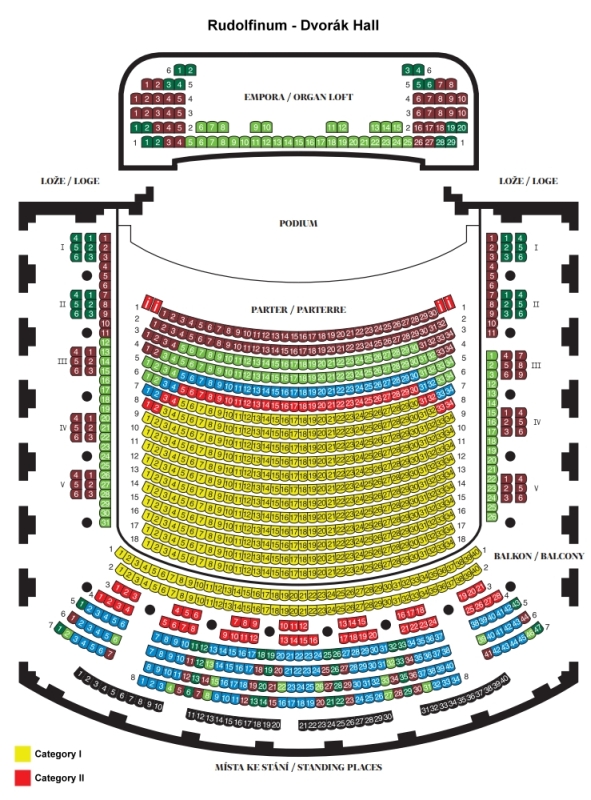
Dvořák Hall
The Czech Philharmonic took the stage in this world-famous concert hall in 1896, performing for its first-ever concert under the baton of Antonín Dvořák himself. The hall remained a space for concerts and performances until 1918, at which time it became a boardroom for the new parliament of the Czechoslovak Republic. The stage and the organ loft became a tribunal (garnished with a statue of President T.G. Masaryk), from which parliamentary leaders presided over proceedings. The hall's original character (and purpose) was restored
in 1940–1942 according to a project conceived by Antonín Engel and Bohumír Kozák, and it has remained in this form through to the present. In accordance with Josef Zítek and Josef Schulz's original proposal, the central visual element in the hall is an organ, which was made in Frankfurt, Germany. During the hall's stint as a parliamentary meeting place, the organ was housed in Brno. When it returned to the Rudolfinum in 1940, its register was extended. Dvořák Hall's final update took place in 1992 when the entire Rudolfinum building underwent reconstruction.
When travelling by public transport, get off at the Staroměstská metro station (Line A), tram stop (trams nos. 17, 18 and 53) or bus stop (no. 207).
Parking is available at the underground parking facility on Jan Palach Square. The facility is not part of the Rudolfinum premises.
Related events