
 EN
EN DE
DE IT
IT FR
FR ES
ES RU
RU JP
JP RO
RO
© Zdeněk Sokol
Mefistofele
Order tickets
 July 2060 July 2060 | ||||||
|---|---|---|---|---|---|---|
Mo | Tu | We | Th | Fr | Sa | Su |
Mefistofele – Arrigo Boito | Opera
Approximate Running Time: 3 hours 10 minutes, including 2 intermissions (20 minutes each)
Language: Performed in Italian, with surtitles in Czech and English
Premiere Date: January 22, 2015
Arrigo Boito stressed that a perfect opera could only accrue from a great and profound work of poetry. And such is Goethe’s Faust. Yet unlike the composers who had set the masterpiece to music previously, he did not limit himself to Part 1, but proceeded to Part 2 of Goethe’s drama, taking place at the imperial court and during Antiquity. Although he had to omit a number of important scenes and characters, the result was an opera lasting nearly five hours. The premiere on 5 March 1868 at La Scala in Milan was a flop, giving rise to one of the most tumultuous uproars in opera history. Boito presently got down to revising the piece and radically reduced the score. The new version, first performed at the Teatro Comunale in Bologna on 4 October 1875, was an instant success. Boito continued to make changes to the opera, until Mefistofele assumed its definitive form in 1881, when it triumphantly returned to La Scala. Mefistofele was his operatic debut and swan song alike. Boito worked on several other operas, including Nerone, yet failed to finish any of them. Nevertheless, during his lifetime Mefistofele was so hugely popular in Italy and beyond that it was enough to prompt the University of Cambridge to grant him an honorary doctorate in music.
Mefistofele was first performed in Prague in February 1881 at the Estates Theatre. The production was also taken up by the newly opened Neues deutsches Theater (now the State Opera), in 1888 and 1897. The National Theatre first presented Mefistofele on 9 December 1885, then in 1896 and, finally, 1936 and 1942, with the celebrated bass Vilém Zítek in the title role. The current Prague production, staged by the renowned drama and opera director Ivan Krejčí, premiered at the State Opera in 2015.
Synopsis
Prologue
A heavenly chorus of angels praises God the Creator. Mefistofele scornfully declares that he can win the soul of Faust. His challenge is accepted by the Forces of Good.
Act 1
Scene 1, Easter Sunday
The aged Dr. Faust and his pupil Wagner are watching the Easter celebrations in the main square in Frankfurt. Faust senses that they are being followed by a mysterious friar, about whom he senses something evil. Wagner dismisses his master’s feelings of unease and as darkness falls they return to Faust’s home.
Scene 2, The Pact
Faust is in his study, deep in contemplation. His thoughts are disturbed in dramatic fashion by the sudden appearance of the sinister friar, whom he now recognizes as a manifestation of the Devil (Mefistofele). Far from being terrified, Faust is intrigued and enters into a discussion with Mefistofele culminating in an agreement by which he will give his soul to the devil on his death in return for worldly bliss for the remainder of his life.
Act 2
Scene 1, The Garden
Restored to his youth, Faust has infatuated Margareta, an unsophisticated village girl. She is unable to resist his seductive charms and agrees to drug her mother with a sleeping draught and meet him for a night of passion. Meanwhile, Mefistofele amuses himself with Martha, another of the village girls.
Scene 2, The Witches Sabbath
Mefistofele has carried Faust away to witness a Witches' Sabbath on the Brocken mountain. They reach to the top and hear the sound of witches approaching from below. They draw near and Mefistofele, declaring himself king, calls to them to bow down before him. The devil mounts his throne and proclaims his contempt for the World and all its worthless inhabitants. As the orgy reaches its climax, Faust sees a vision of Margherita, apparently in chains and with her throat cut. Mefistofele reassures him that the vision was a false illusion. The revels continue.
Act 3
Faust's vision had been true. Margareta lies in a dismal cell, her mind in a state of confusion and despair. She has been imprisoned and condemned to death for poisoning her mother with the sleeping draught supplied by Faust and for drowning the baby she had borne him. Faust begs Mefistofele to help them escape together. They enter the cell and at first Margareta does not recognize her rescuers. Her joy at being reunited with Faust turns to horror when she sees Mefistofele and recognizes that he is the devil. Refusing to succumb to further evil, Margareta begs for divine forgiveness. She collapses to the cell floor as the Celestial choir proclaims her redemption.
Act 4
Mefistofele has now transported Faust back in time to Ancient Greece. Helen of Troy and her followers are enjoying the luxurious and exotic surroundings on the banks of a magnificent river. Faust, attired more splendidly than ever, is easily able to win the heart of the beautiful princess. In a passionate outpouring they declare their undying love and devotion to each other.
Program and cast
Conductor: Gabriel Feltz
Mefistofele - Jerzy Butryn
Faust - Kyungho Kim
Marguerite - Petra Alvarez Šimková
Martha - Jana Sýkorová
Wagner - Josef Moravec; Martin Šrejma
Elena - Victoria Khoroshunova
Panthalis - Sylva Čmugrová
Nereo - Josef Moravec; Martin Šrejma
Stage director: Ivan Krejčí
Sets: Milan David
Costumes: Marta Rozskopfová
Light design: Daniel Tesař
Movement coach: Igor Vejsada
Chorus master: Adolf Melichar
Chorus master of Pueri gaudentes: Libor Slád
Dramaturgy: Jitka Slavíková
State Opera Chorus
State Opera Orchestra
National Theatre Opera Ballet
Pueri gaudentes boys’ choir
Prague State Opera
The State Opera today
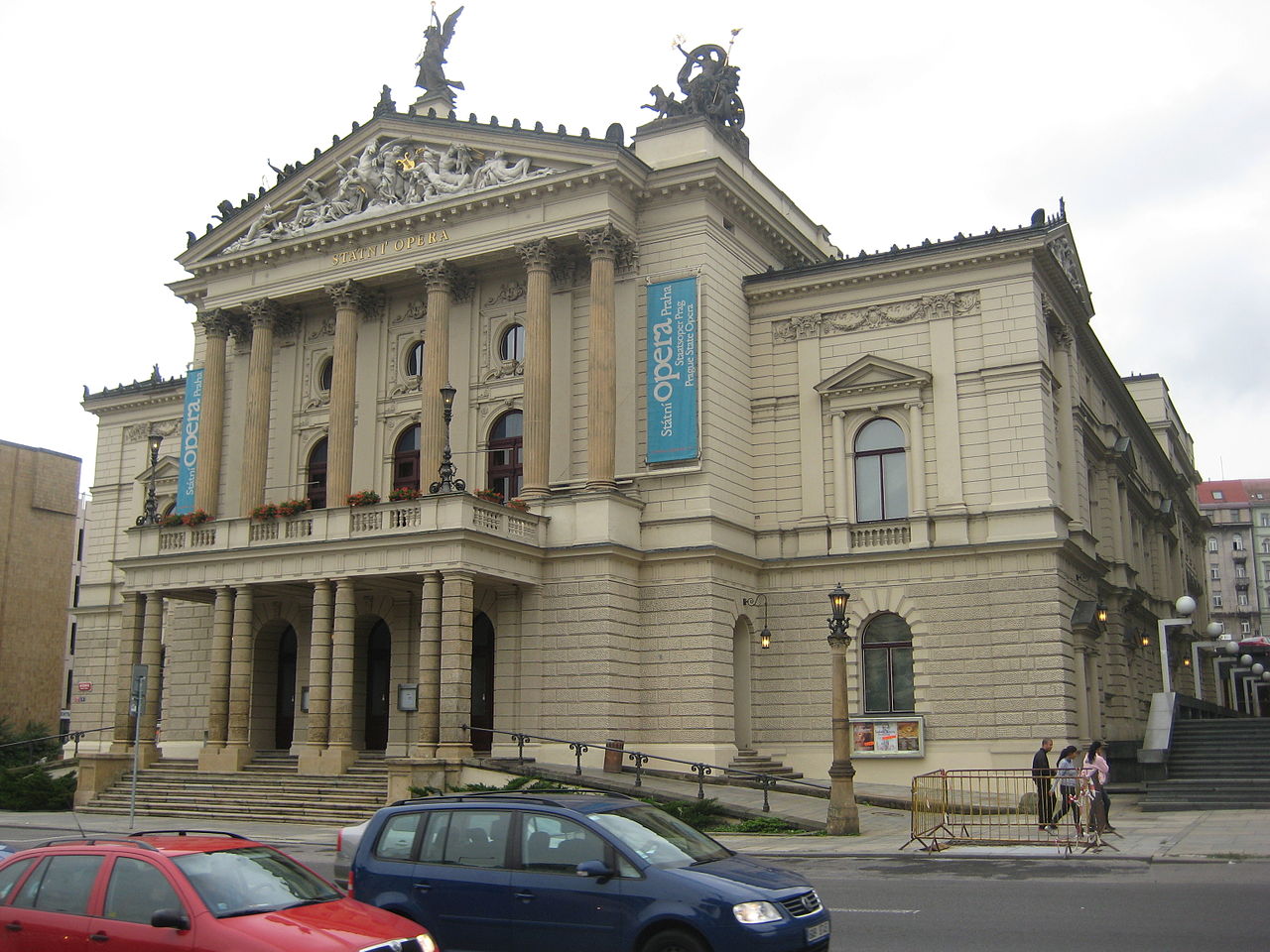
The State Opera (formerly the State Opera Prague, between 1948 and 1992 the Smetana Theatre, and originally the New German Theatre) has been a part of the National Theatre since 2012. The Opera and Ballet ensembles give repertory performances at the State Opera.
Practical information
Where to buy tickets
When purchasing online, you can get an e-ticket. You can pick up printed tickets in person at the box offices of the National Theatre.
The National Theatre sells tickets up to 6 months in advance.
Sales always start on the 1st day of the month at 9am, except in January when pre-sales do not start until the 2nd day due to a public holiday.
When do the doors open prior the show?
The National Theatre, The State Opera and the Estates Theatre are open 45 minutes prior the performance in time of increased hygiene practices. The evening box offices are open at the same time.
The main box office at the New Stage on play days is open until the beginning of the show. The New Stage auditorium is open 30 minutes prior the performance.
What kind of dress is suitable for attending the theatre?
Dress codes are only required for special events. By their appearance, the visitors indicate that they are aware of the festive occasion they are experiencing at the theatre. Persons in markedly soiled clothes and persons whose behaviour may compromise the safety of the other visitors are not allowed to enter the respective premises, or can be ejected from them.
Where do I park? How much does the parking cost?
While visiting the State Opera, you can take the slip road on Wilsonova street from the left lane close to the State Opera building to the Parking Centrum above-ground garage. The parking fee is 60 CZK/h.
Only non-cash payments: Parking fees can be paid exclusively by cashless payment card or another virtual device (watch or phone). Thank you for your understanding.”
Buffets at the State Opera
No waiting. For your benefit, please pre-order your food and beverages at the bar to minimize waiting in the queue!
Accessibility for the disabled
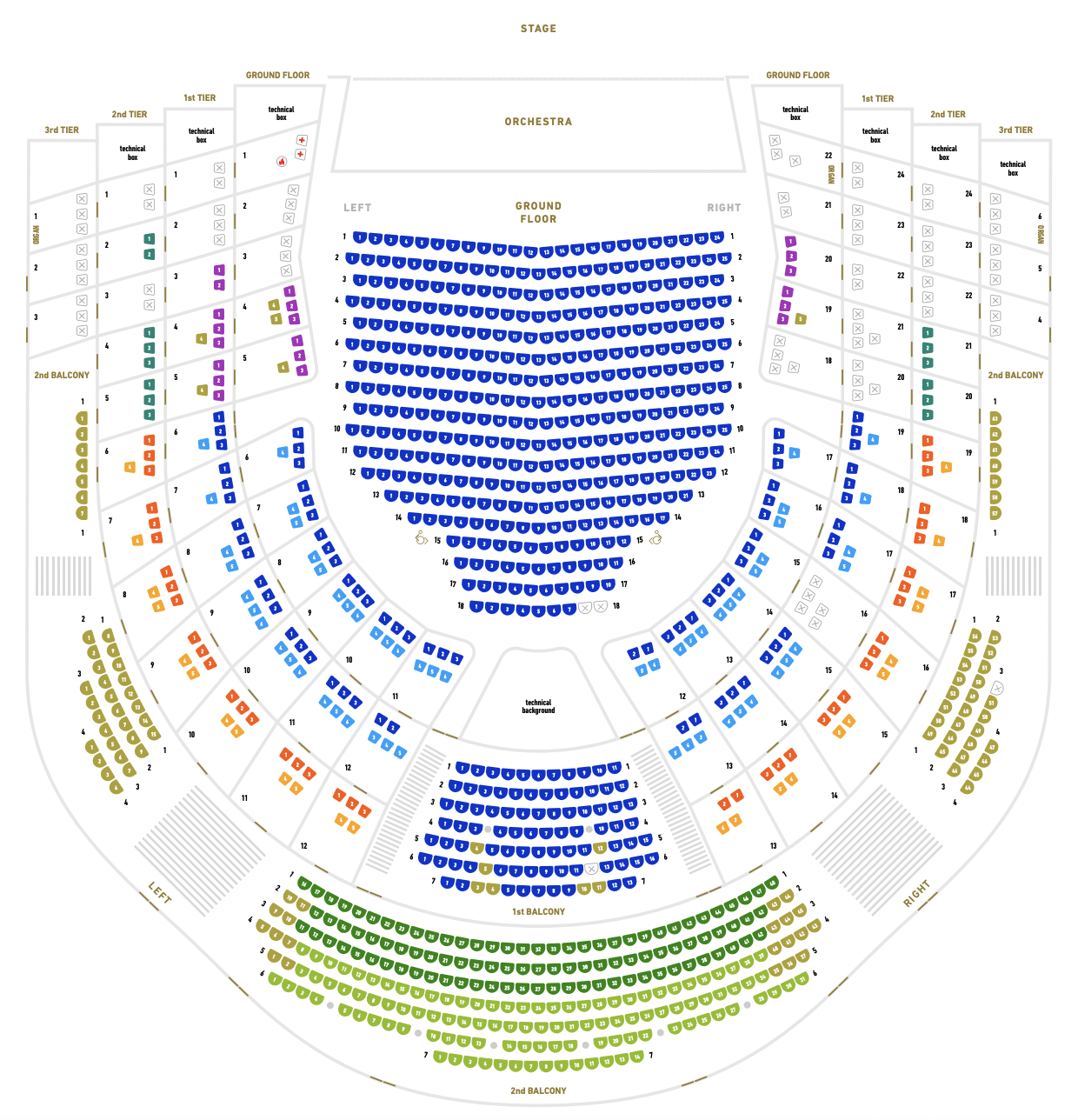
All the National Theatre venues are accessible to disabled persons, with special seats allocated for them in the auditorium. It is, however, advisable to consult each visit in advance with the National Theatre Sales Department.
Can I get an artist’s signature? Can I leave them flowers?
The National Theatre does not provide signatures of artists or contacts to them. You can leave flowers for artists performing in the show before its beginning at the theatre stuff.
History
The Prague State Opera resides in the building which on January 5, 1888 was opened as a Prague German stage with the performance of Wagner’s opera, The Mastersingers of Nürnberg. In the 19th century, Prague Germans performed in the Estate’s Theater in alternation with a Czech company. Desire for their own theater led to negotiations in 1883 for the construction of a new theater building for the German Theater Association. Over the next three years, a blueprint was drawn up and handed over to the Vienna atelier of Fellner and Hellmer. Also sharing in the design was the architect of the Vienna Municipal Theater, Karl Hasenauer, while Prague architect Alfons Wertmüller took part in the construction. Financing came from private collections. With its spacious auditorium and neo-Rococo decoration, this theater building is among the most beautiful in Europe.
Access:
By tram
By daytime tram No. 11 to the stop “Muzeum”, through the underpass beneath Legerova street in the direction of the NationalMuseum, at the crossroads turn right along the NewBuilding of the NationalMuseum.
By daytime trams Nos. 3, 9, 14 and 24 or night trams Nos. 51, 52, 54, 55, 56 and 58 to the stop “Václavské náměstí”, then by foot uphill on the left side of the Wenceslas Square to the traffic lights across Wilsonova and Vinohradská streets. Then turn left along the NewBuilding of the NationalMuseum.
By metro
To the “Muzeum” station, lines A and C (green and red), and then by foot along the NewBuilding of the NationalMuseum.
Related events